
Today’s guest blog is about a very personal journey. I first met Henrietta Barkham some years ago, and we have stayed in contact ever since. I don’t do that often, but when Henrietta speaks about her passion, it is completely contagious. And I like that kind of energy.
I don’t know how Henrietta found time to write this blog, but I guess that is just what powerhouse women do.
People find it very hard to write about themselves. I personally struggle to write about myself in a positive way and will often write about myself in the third person. But when you can write about yourself, your journey, and your mission in life, trust me that seeing it on paper is something very unique.
This guest blog is a very good example of why I use my platform to promote others, to give others a voice, to have their stories heard, just as I wish people had done for me.
One line that hit me in this blog was : Children need to know they matter to someone; they need to know that someone believes in them. Its that simple. It’s the reason I get up and go t work each day, and I know that Henritta feels the same, hence why I asked her to write for me.
So grab a cuppa, snuggle up and listen to the journey of women who refused to give up on herself, her family and the children of the UK.
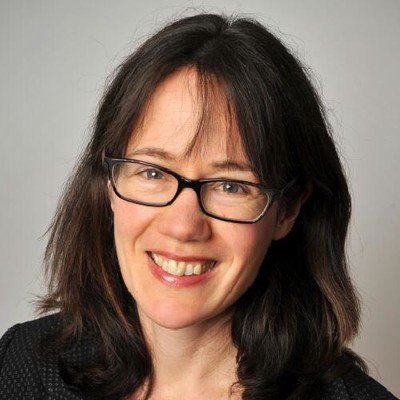
I work in local government children’s services, and like most people (in my experience) working in the sector, I’m very passionate and dedicated to giving my best to help to improve the outcomes for children and families. But what drives me? We all have our own stories and I’m very grateful to Kendra for offering me the opportunity to share mine.
In my story, the starting point of my journey in children’s services came about through a series of unexpected life events. After leaving school, I went to art college, and fell pregnant while still studying. I was living in a student house in south London and my then boyfriend lived in Germany, also studying. I paused my course for a year, moved to Germany and then we both moved back to London a year later so that I could finish my course. Nearing the end of the course, I found I was pregnant again, and a cancerous tumour was discovered on one of my ovaries at my 12-week scan. I had to have open surgery a week later. Before the surgery I had to sign a consent form to allow ovaries, womb and everything to be removed if needed, and even if my womb wasn’t removed, I didn’t know whether my baby would survive, nor how long I would be around for my children (my elder daughter was 18 months old at the time). I found my idea of a ‘life span’ had suddenly been turned upside down, like thinking I was on a long holiday, only to suddenly be told it might suddenly be over tomorrow. It made me focus on what I could do right here right now to give the best chances to my child and unborn baby, if it survived. I threw myself into learning everything I could about baby and child development, to understand what was most important for me to do in whatever time I had. I read about attachment, talking, reading aloud, nursery rhymes, physical development, social and emotional development and creative play. Training as an artist may not have been a great career move, but it was very useful for an early years practitioner in the making. My second daughter survived the rather traumatic pregnancy, and I had a plan in my head, a bargain I’d made with some imaginary deity. I would be around until she was at least 3, as I’d learnt the first 3 years were so crucial developmentally.
A year or so later, I was at a baby and toddler group and a friend I’d made at the group was bemoaning how difficult it was to find a good childminder; she had gone back to work and wasn’t happy with the care her toddler was receiving. She said to me out of the blue, ‘you know, you’d make a great childminder. If you register, you could look after my children for me!’ I thought it over. By then, my horizons were lengthening from thinking ‘I want to be around until my youngest is at least 3’, to ‘until they’re both at school’. Being a childminder could work for me I thought. I can continue to be there for my children, and my house basically already looks like I’ve got a pre-school at home with all the activities we do. So I registered with Ofsted, did my introductory training, and started looking after my friend’s children, initially with no plans to do anything more. Then other parents and carers started contacting me and my childcare business (I never saw myself as a business) grew – I looked after a little girl with learning disabilities, a boy with delayed speech, a baby whose mum was studying as well as working fulltime to better herself. I did some short-term work for social services, when they needed a childminder to care for a child whose parent was in court, or temporarily unable to look after them. And lots of others. I found caring for children always came with a very intense sense of duty to do the best for them that I possibly could, whatever that might be, and many of them had opportunities for attention, activities and learning through play that I realised they might not have had otherwise. And I started to think, ‘I want to help other people do this’. I was lucky – at that time the then Labour government was investing heavily in the early years workforce. I was one of the first childminders in the country to receive Early Years Professional Status (a short-lived qualification, intended to be equivalent to Qualified Teacher Status). Shortly after that my younger daughter started school, and in a sense, I’d done what I set out to do, I’d been around for their earliest years. I was still having all too regular hospital visits for tests and check-ups, but by this point I believed that I might have a bit more time on this earth, and it would be a good use of this time to be able to help others working in the early years. I got a job working for a charity as a childminding development worker, which meant I trained, supported and advised childminders.
Childcare as a profession is arguably undervalued and underappreciated. As I developed relationships with childminders in my ‘patch’, I pondered this lack of value attributed to their work, and indeed how many of them had wonderful, caring attributes, were incredibly skilled and hard-working, yet many of whom appeared never to have had their efforts recognised or appreciated. I remember one lady, who was known as a bit of a ‘dinosaur’ in the local childminding circles, actually welled up with tears, commenting that ‘no one has ever come and praised me for what I do’ when I gave her some specific and genuine positive feedback about an aspect of her work. After that, she worked with me really willingly and I was able to support her to make some changes and improvements to her practice
I learnt at that point the power that there is in seeing something that someone does well, and pointing it out and building from there, building the relationship and seeing what they can go on to achieve. I’ve had the privilege to work with so many dedicated and passionate people over the past 18 or so years, and to have been supported by some amazing managers: in early years services, in social care and in children’s services commissioning. Over this time I’ve observed that there are many people (often women, and perhaps that is simply because the children’s services workforce is predominantly female) who, like that childminder I worked with, are incredible grafters, doing the best they can in complex life circumstances juggling all sorts of challenges. And often when I have noticed and pointed out a strength that they have, something that they do well, they have responded similarly to that first childminder – occasionally with tears and frequently the comment that no one has noticed or recognised that skill, or deed, or quality in them before. It opens the door to the most amazing changes in people, in their belief in themselves and what they can then go on to achieve in terms of improving outcomes for children.
Children need to know they matter to someone; they need to know that someone believes in them. I find that the most important aspect in getting the best from staff, colleagues or partners is the same – people need to know they matter, know that what they do is seen and recognised, particularly by managers or senior leaders in whatever context they work in. I always come back to ask myself the same fundamental question: how can I help here? Or put another way, how can I be of service? And that brings me back to what motivates me in my role in children’s services – the term ‘public servant’ can sound rather old-fashioned, but I do see myself as being in the service of the public. I’m now lucky enough to be in my 50s, and recently had further surgery which hopefully means an end to over 2 decades of regular oncology checks. Returning to where I started, very simply, what gets me up in the morning is playing my part in helping children get the best start in life.
You can find Henrietta here: https://www.linkedin.com/in/henrietta-barkham-583ab725/
 Out of the Shadows